Wealth, legacy and reinvention

What do you actually own?

Three books on building wealth that survives loss, and handing it on without ruining the people you love.

Cover of Last Supper in Salisbury by Jane Borrowdale Cover of The Wealth We Never Lose by Jane Borrowdale Cover of The Table We Carry by Jane Borrowdale
Wealth begins as reputation, long before it becomes money. From Last Supper in Salisbury

One table, three books

It began at a dinner table in Salisbury

On Christmas Day 1979, in a dining room in Salisbury, Rhodesia, Jane Borrowdale's father asked his two daughters a question. The country they grew up in was ending, and within months the family would be on a plane to Hong Kong.

"What makes a person wealthy?"

Jane said money. Her twin sister Judith said security. He told them they were both right and both wrong. The books follow that answer through a lifetime: how to build it, and how to pass it on.

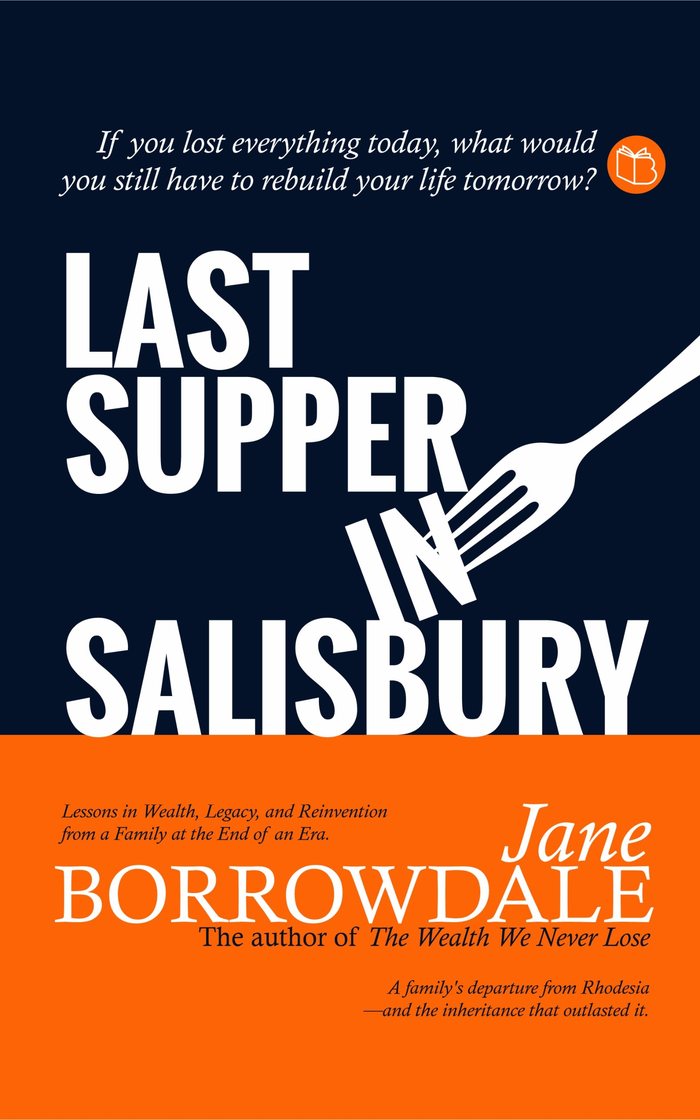
Cover of Last Supper in Salisbury

The story

Last Supper in Salisbury

Lessons in wealth, legacy and reinvention from a family at the end of an era.

It is Christmas 1979 and a father tells his daughters the family is leaving Rhodesia. Narrative nonfiction about the departure, the first hard years in Hong Kong, and the inheritance that outlasted everything the family left behind.

  • 14 principles gathered on one page
  • 12 reflection questions for journaling or a book club
  • A short note on Rhodesian history for readers who don't know it
See it on Amazon
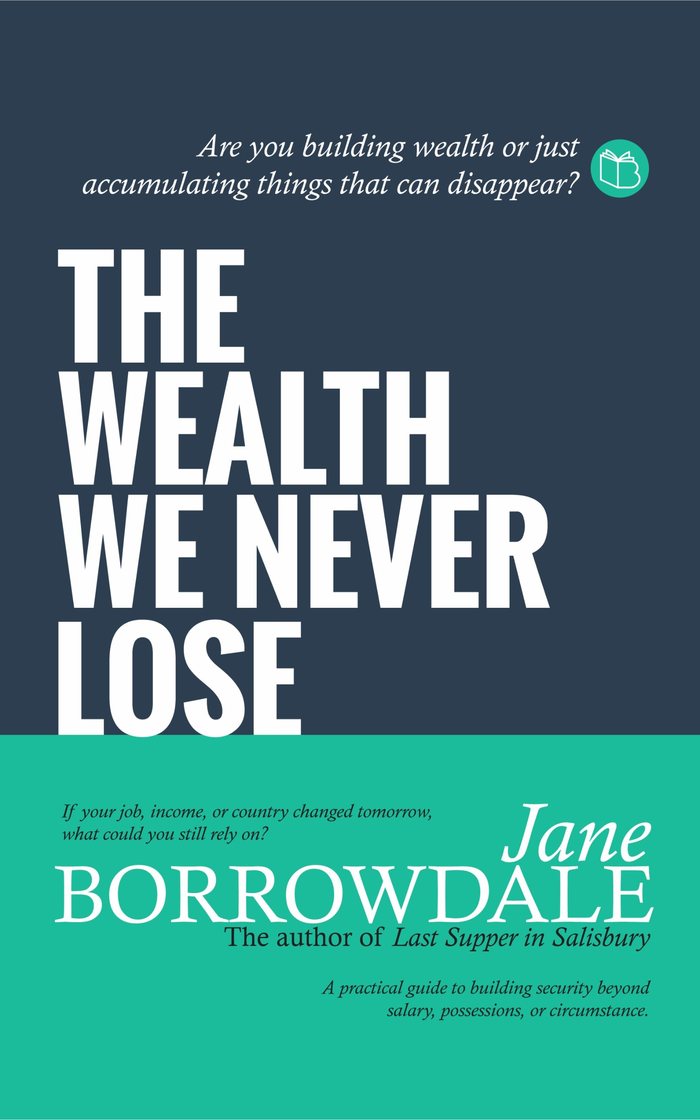
Cover of The Wealth We Never Lose

Build it

The Wealth We Never Lose

A practical guide to building security beyond salary, possessions or circumstance.

If your job, income or country changed tomorrow, what could you still rely on? Twelve chapters, each with a story, the principle behind it, a modern way to apply it, and a question to answer.

  • Skills, relationships, reputation and judgment as assets you can build
  • How to avoid depending on one income
  • The portable-wealth self-rating you can try below
See it on Amazon
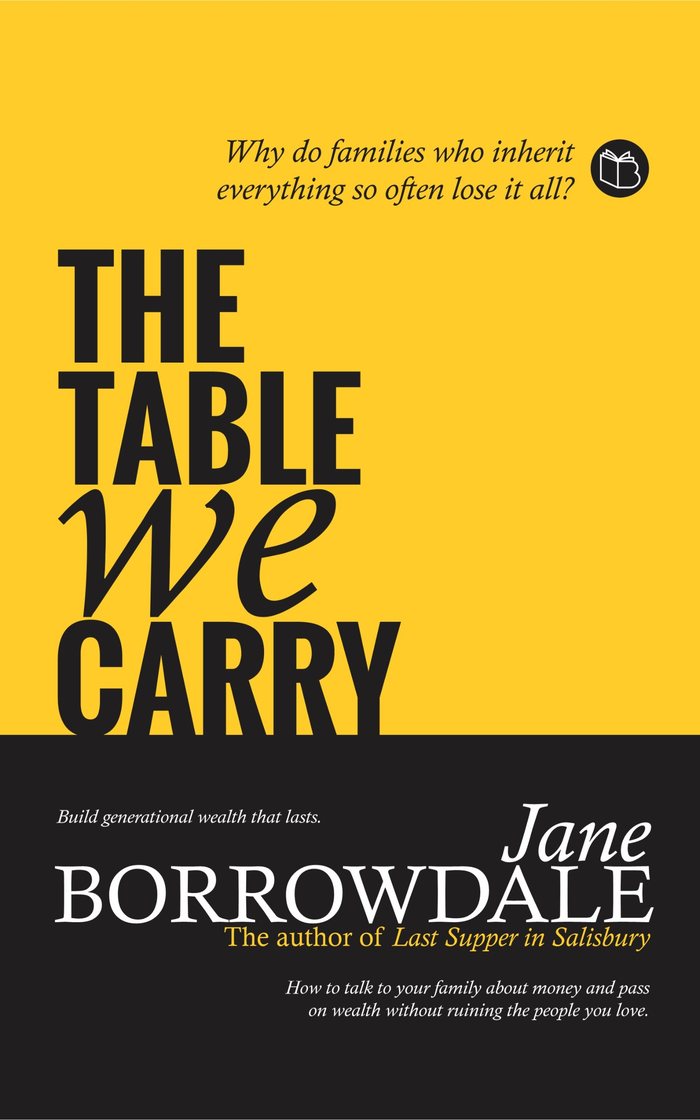
Cover of The Table We Carry

Pass it on

The Table We Carry

How to talk to your family about money and pass on wealth without ruining the people you love.

Why do families who inherit everything so often lose it all? A guide to the conversations that prepare children, spouses and siblings, from a child's first five dollars to the letter you leave behind.

  • 12 Table Conversations, matched to ages and moments
  • A 48-hour family continuity checklist
  • A letter template and a quarterly family money meeting

Legal and tax examples in this book describe England and Wales. The conversations apply anywhere.

See it on Amazon

Free tool from The Wealth We Never Lose

How much of your wealth would survive?

Rate yourself from 1 to 10 on seven things that travel with you. Anything under 7 gets one action for this month. Your answers stay in your browser.

If you could only pass one thing on to the next generation, one skill, one principle, one piece of understanding, what would it be? And what are you doing today to make sure it survives?

Free tool from The Table We Carry

The 48-hour family continuity folder

If you were not here tomorrow, could your family find what they need within 48 hours? Tick what already sits in one place that someone you trust can reach.

0 of 10 ready

An organizing checklist, not legal, tax or financial advice. Wills, powers of attorney and trusts belong with a qualified attorney (US) or solicitor (UK). Your ticks stay in your browser.

    From The Table We Carry

    Twelve conversations for the family table

    Children learn from money talk at home long before they learn it anywhere else. These are the twelve conversations the book walks through, in the order a family tends to need them.

    Ages 7 to 9

    The Three-Jar Stewardship

    Seed, Goodwill and Harvest. An empty jar means waiting.

    Ages 10 to 12

    The Cost of Living

    A real household bill, and the hours of work behind it.

    Ages 13 to 15

    The Performance Tax

    What we pay for things bought to impress other people.

    Ages 16 to 17

    The Four Valuation Questions

    How to judge a purchase, contract or side venture before risking your own money.

    Ages 16 to 18

    The Family Stewardship Policy

    How the family protects what it has built, explained before dating gets serious.

    Ages 21 to 25

    The Builder's Match

    Support for a first home or business, matched by savings and accountability.

    Spouses

    The Quarterly Business Review

    One ledger, two people, and a safety reserve kept apart from growth money.

    Any age

    The "Worst Deal I Ever Did" Dinner

    A parent shares a real mistake, what it cost, and the rule it created.

    Siblings

    The Sibling Transparency Session

    Fair is not the same as equal, explained while everyone is healthy.

    Young adults

    The Partner Character Audit

    Spotting goodwill, integrity and stability in a lifelong partner.

    Parents and adult children

    The "Later Years" Briefing

    Powers of attorney, medical wishes and where you want to live.

    The whole family

    The Ethical Will Reading

    Values, hard lessons and blessings read aloud over a Sunday meal.

    The full guide, with what to say and how to start each one, is in The Table We Carry.

    About the author

    Jane Borrowdale

    Jane was seventeen when her father asked her at the last Christmas dinner the family would share in Salisbury what she actually owned. Within months the family had left for Hong Kong, carrying what they could fit in suitcases and what they had built inside themselves.

    She spent the next four decades in property investment across Asian markets. She rebuilt more than once, and learned which kinds of wealth cross borders and which do not. Her twin sister, Judith, built a parallel career in education.

    Jane is the author of Last Supper in Salisbury, The Wealth We Never Lose and The Table We Carry: three books on legacy, resilience and how families talk about money. She lives in the United Kingdom with her family.

    1. Salisbury, RhodesiaChristmas 1979, the last supper
    2. Hong Kong1980 onward, four decades in property
    3. United KingdomToday, writing and teaching what lasts